IRI Award 2026: Brazil’s Smoothest Roads

IRI Award 2026: Recognising Outstanding Road Smoothness in Brazil

Who builds Brazil’s smoothest roads? MOBA Latin America (LATAM) sets out to answer this question with its IRI Award. In the third edition of the competition, seven construction companies and nine road operators competed in two categories. In the end, just hundredths separated the winners from their closest competitors.

Automatically Successful

The MOBA Tech Podcast

A Close Race for Brazil’s Smoothest Roads

Since 2024, MOBA LATAM has held the annual IRI Award to identify Brazil’s smoothest roads. Each year, the field grows and the race for the top positions becomes closer. This time, seven construction companies and nine road operators from five states—Mato Grosso, Mato Grosso do Sul, Minas Gerais, Rio de Janeiro and São Paulo—entered the competition. Only projects completed using the BIG-SONIC-SKI or SUPER-SKI were eligible.

A panel of MOBA experts from engineering and product support determined the rankings. Their benchmark, which also gives the competition its name, was the International Roughness Index, or IRI. It describes a road’s longitudinal evenness: the lower the value, the smoother the road surface.

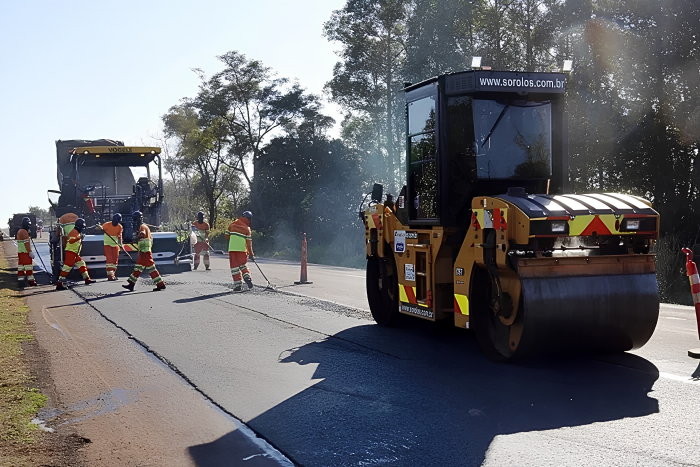
This year, numerous participants set new benchmarks with their low IRI values, making the competition particularly close. Two projects ultimately stood out: Neovia Infraestrutura Rodoviária won the Rehabilitation and Repair category with just 0.64 m/km, while Sanches Tripoloni achieved the year’s best result in the New Construction and Expansion category with 0.53 m/km.
Rehabilitation and Repair: First Place for Neovia Infraestrutura Rodoviária

Neovia Infraestrutura Rodoviária secured first place with a project on the Anhanguera-Bandeirantes road network in the state of São Paulo. Connecting the metropolitan areas of São Paulo and Campinas, the network is one of the country’s most important corridors for passenger and freight traffic. Neovia entered the rehabilitation of an existing section of this busy route.

To achieve the required road smoothness, the team used the MOBA BIG-SONIC-SKI. With ultrasonic sensors distributed over an extended distance, the system provides an averaged height reference for automatic screed levelling, helping to compensate for unevenness during paving. Neovia has been working with the technology since 2022. The result: an average IRI of 0.64 m/km and first place in the Rehabilitation and Repair category.

New Construction and Expansion: Sanches Tripoloni Sets the Benchmark on the BR-163

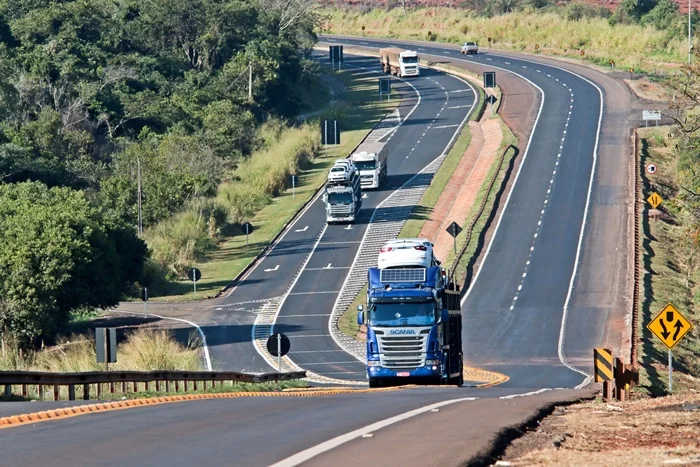
Sanches Tripoloni won the New Construction and Expansion category with a project on the BR-163 in the state of Mato Grosso. Between Lucas do Rio Verde and Sorriso, the company built an additional carriageway for road operator Nova Rota do Oeste on one of Brazil’s most important transport routes.

Nova Rota do Oeste had defined clear quality targets before the project began. Sanches Tripoloni’s results exceeded all expectations: an average IRI of 0.53 m/km secured first place in the New Construction and Expansion category and was also the lowest value in the entire competition. This project was also completed using the BIG-SONIC-SKI, which Sanches Tripoloni has been using since 2024.
The Second- and Third-Place Projects

Other construction companies also achieved strong results with projects on Nova Rota do Oeste’s road network. Consórcio Caminhos do MT (CCMT), comprising Pedrisa Pavimentações and Neovia Infraestrutura Rodoviária, secured top rankings with two sections of the BR-163. Between Sorriso and Sinop, the consortium carried out both road expansion and the rehabilitation of an existing carriageway.

The newly built section achieved an average IRI of 0.71 m/km, earning second place in the New Construction and Expansion category.

CCMT also took second place in the Rehabilitation and Repair category, with an IRI of 0.65 m/km. Vilasa and road operator Ecovias do Cerrado followed in third place with a section of the BR-365 in the state of Minas Gerais, where the average IRI was 0.78 m/km.

In the New Construction and Expansion category, a new user of MOBA technology secured third place: construction company Brasoli Obras e Construções and road operator Way360 earned their ranking with a section of the BR-163 in Mato Grosso do Sul. The average IRI was 1.16 m/km.

Award Ceremony at Paving Expo

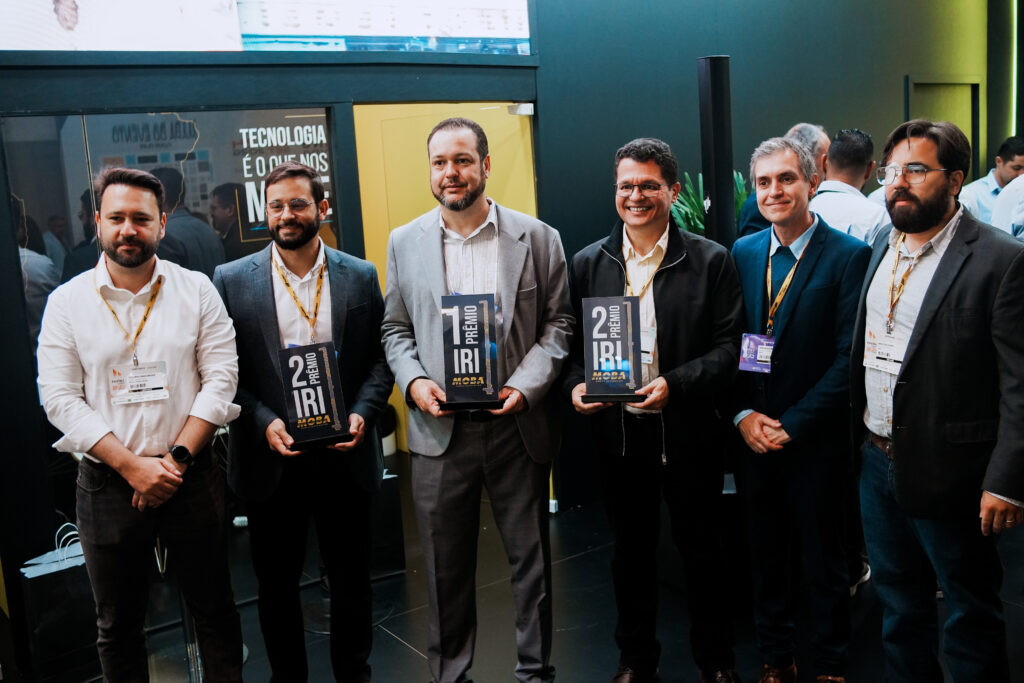
The competition concluded with an award ceremony at Paving Expo in São Paulo. With these awards, MOBA LATAM recognised the achievements of the participating construction companies and road operators. Their projects demonstrate how precise asphalt paving and modern levelling technology work together, delivering measurable results on Brazil’s roads.
EU Machinery Regulation 2027: Safety & Cybersecurity

EU Machinery Regulation 2027: Connecting Functional Safety and Cybersecurity

Machinery is becoming increasingly digital and connected. This creates new opportunities, but also new safety risks. With the EU Machinery Regulation (EU) 2023/1230, the EU is responding to this change. The Regulation sets out the safety requirements machinery must meet before it can be made available on the European market or put into service for the first time. From 20 January 2027, it replaces the existing Machinery Directive 2006/42/EC and applies directly in all EU Member States.

For manufacturers, this means reviewing existing safety concepts, identifying potential vulnerabilities and closing any gaps. As technical foundations such as standards are revised and new requirements are clarified, the deadline continues to approach. This makes it a good time to take stock: Where do we currently stand on functional safety, cybersecurity and harmonised standards? And what should OEMs and technology suppliers already be considering?

Automatically Successful

The MOBA Tech Podcast

1. Standards in Transition: Adapting the Technical Framework

The European Commission, the European Committee for Standardization (CEN) and the European Committee for Electrotechnical Standardization (CENELEC) are working on an extensive standardisation programme to support the new Machinery Regulation.

The main priorities include:

  • Reviewing existing harmonised standards against the new essential health and safety requirements.
  • Identifying regulatory and technical gaps.
  • Developing requirements for safety-related cybersecurity.
  • Addressing emerging technologies, including AI-enabled safety functions.
  • Maintaining continuity for existing machinery standards wherever technically and legally appropriate.

The challenge is substantial: hundreds of existing standards need to be assessed, transferred or revised. At the same time, established standards should remain usable wherever technically and legally appropriate.

2. Considering Functional Safety and Cybersecurity Together

For machinery manufacturers, compliance with standards such as EN ISO 13849-1 or IEC 62061 remains essential. When assessing digital risks, however, they must also consider whether cyber threats could compromise a machine’s safety functions.

The new Machinery Regulation explicitly addresses this connection. Particularly relevant are the requirements in Annex III, Section 1.1.9 on protection against corruption and Section 1.2.1 on the safety and reliability of control systems. These include protection against changes to software, data or hardware that could lead to hazardous situations.

A technical gap analysis is therefore a useful starting point for manufacturers. It shows which requirements are already covered and where action is needed. Particular attention should be given to the following questions:

  • Software and firmware: How is safety-related software protected against unauthorised changes?
  • Parameters: How are unauthorised changes to safety-related settings prevented?
  • Remote access and diagnostics: How are access points to the machine secured?
  • Software versions: Can versions and changes be clearly traced?
  • Interfaces and communication: Which digital interventions could cause hazardous situations?
  • Evidence: How are changes and interventions involving safety-related software documented?

3. Cybersecurity: EN 50742 and the Work of CENELEC

How can protection against digital interference be implemented technically? This is the question addressed by the prEN 50742 standardisation project on protection against corruption, being developed within the CENELEC TC 44X technical committee. The draft addresses the relationship between cyber threats and machinery safety, particularly the requirements of Annex III, Sections 1.1.9 and 1.2.1.

It is intended to provide manufacturers with a structured basis for assessing these risks and identifying protective measures. One important distinction remains: a draft standard does not establish a presumption of conformity. This requires publication of the reference to the relevant harmonised standard in the Official Journal of the European Union. The presumption of conformity then applies to the requirements covered by that standard.

4. Harmonised Standards: The Transition Is Not Yet Complete

Alongside the development of new standards, transferring existing harmonised standards to the legal framework of the Machinery Regulation plays an important role. The European Commission is preparing the necessary framework for this.

Nevertheless, manufacturers must distinguish between:

  • Standards currently harmonised under Directive 2006/42/EC.
  • Standards intended to be carried over to the new Regulation (EU) 2023/1230.
  • Standards undergoing revision or development.
  • Standards whose references have been officially published under the new Regulation.

This distinction helps manufacturers assess the relevance of existing evidence. An existing standard does not automatically cover all new requirements, particularly in the area of safety-related cybersecurity. Manufacturers should therefore check which requirements are addressed by the standards they use and where additional assessments are needed.

5. The Cyber Resilience Act: An Additional Legal Framework for Digital Products

The Machinery Regulation is not the only legal framework that needs to be considered for connected machinery and components. The Cyber Resilience Act (CRA), Regulation (EU) 2024/2847, introduces additional cybersecurity requirements for products with digital elements.

For manufacturers of electronic control units, programmable controllers, sensors, gateways and connected machinery systems, understanding the interaction between the two regulations is therefore becoming increasingly important.

The Machinery Regulation and the CRA have different scopes and application timelines. Companies must therefore determine which requirements apply to their respective products and how these can be addressed together.

What Should OEMs and Technology Suppliers Do Now?

For the cranes and lifting equipment sectors, as well as mobile off-highway machinery, the priority should now be clear: start the technical gap analysis rather than waiting for the final harmonised standards. Manufacturers should review their safety architectures, software lifecycle processes, remote connectivity, cybersecurity controls and technical documentation.

The key question goes beyond the machine’s functional safety: can the machine remain safe when its digital control environment is exposed to foreseeable cyber threats?

The next generation of machinery compliance will require much closer integration of functional safety, cybersecurity and systems engineering. January 2027 is not the beginning of this transition. It is the deadline for completing the preparations.

SUPER-SKI in Indonesia: Precision Paving in Bekasi

Major project in Indonesia: SUPER-SKI in use at one of Southeast Asia’s largest proving grounds

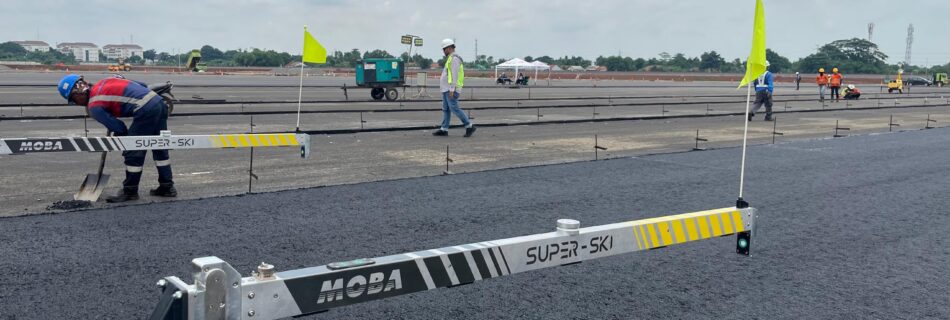
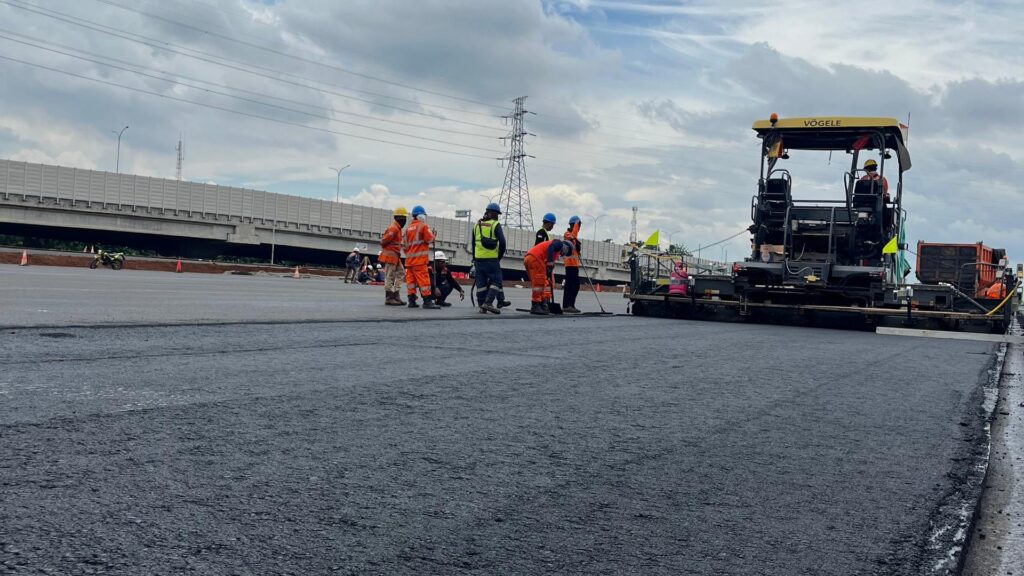
The construction of one of Southeast Asia’s largest vehicle proving grounds combined demanding quality requirements with a tight schedule. To build the test tracks and high-speed oval, the construction team in Bekasi, Indonesia, turned to SUPER-SKI.

Automatically Successful

The MOBA Tech Podcast

Demanding requirements and a tight construction schedule

Bekasi, in the Indonesian province of West Java, east of Jakarta, is one of the country’s most important industrial hubs. The region is home to international automotive manufacturers and a dense network of suppliers. It is also the location of BPLJSKB, the government-run vehicle testing and certification centre.

At the heart of this modern centre is its proving ground, designed for vehicle testing in accordance with international requirements, including United Nations (UN) technical regulations. The 19-hectare facility, with its numerous specialised test tracks and a high-speed oval, was built between 2024 and 2025 in just a year and a half. The combination of demanding quality requirements and a short construction period presented particular challenges for the construction team.

Precision along every metre of track

To deliver reliable and reproducible measurements, proving-ground pavements must meet exacting requirements for precision and surface evenness. Even the smallest irregularities can affect vehicle dynamics, ride comfort or safety tests.

The difficulty of meeting these requirements in practice became apparent when the first asphalt layer was laid. This was initially paved using the conventional stringline method. However, the required accuracy could not be achieved consistently. Repeated rework was needed to meet the technical specifications: sections had to be partially removed, the stringlines reset and the asphalt layer laid again. This resulted in additional costs and delays to construction.

To address these challenges, the main contractor sought a technical solution. Support came from GEOMETA, MOBA’s distribution partner in Indonesia. Based in Jakarta, the company specialises in geospatial, surveying and machine control solutions. Together with the main contractor, GEOMETA organised a field trial using SUPER-SKI. The aim was to demonstrate that the system could consistently achieve the required quality standards.

Improved surface evenness with SUPER-SKI

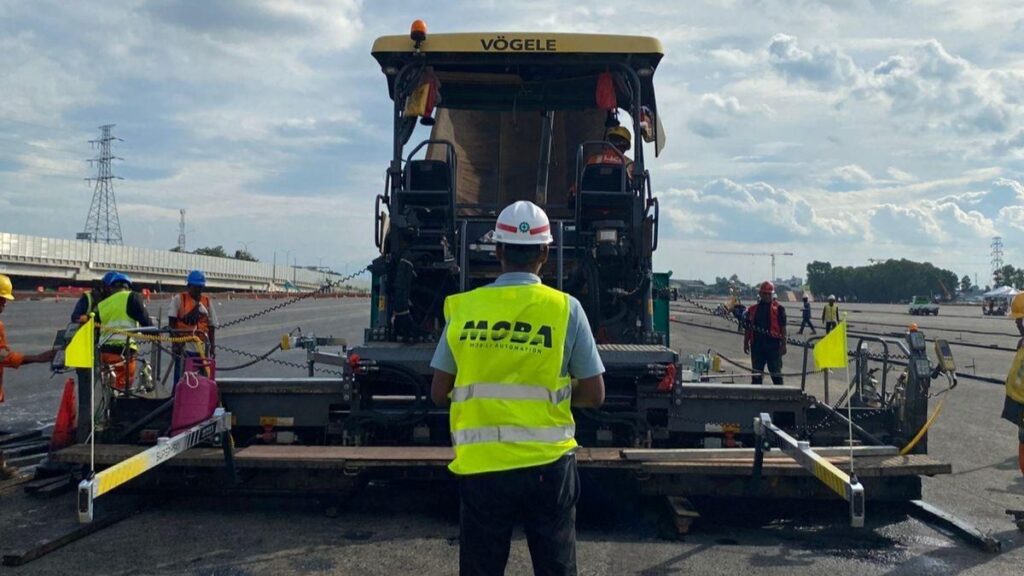
The high-speed oval provided the practical test of whether the technology could meet the project’s demanding requirements. MOBA SUPER-SKI was used across the entire oval, from the second asphalt layer, the binder course, through to the fourth and final layer, the surface course.

The aim was to maximise surface quality along the entire track while making paving more efficient. A surface evenness tolerance of ±3 mm, measured using a 3-metre straightedge, was specified in advance as the quality benchmark. This required a properly prepared substrate that met the technical specifications.

The results were convincing: subsequent profilometer measurements on two representative sections of the high-speed oval demonstrated a clear improvement in surface quality. The areas evaluated included both a straight section and a section with a 12% crossfall, covering different requirements along the track.

  • Straight section: standard deviation reduced from 1.00 mm to 0.43 mm.
  • Section with a 12% crossfall: standard deviation reduced from 0.82 mm to 0.52 mm.

Surface evenness on the sections examined was therefore improved by around 30 to 60%. The values achieved were well within the specified tolerances, demonstrating the system’s benefits for construction projects with demanding requirements for precision and surface quality.

The result: higher quality with less effort

The benefits extended beyond the measurement results. The system also proved its value in day-to-day work on site. According to those involved in the project, paving time was reduced by more than 50%. At the same time, no rework was required on the test areas paved using SUPER-SKI to meet the specified requirements.

Feedback was equally positive: the project management team, consultants, construction contractor and paver operators all gave consistently positive assessments of the technology’s use. For the team on site, this primarily meant less time spent on corrections and rework, leaving more time for the next stages of construction.

Digital Waste Management: Connecting Systems

Digital Waste Management: Why Connected Systems Deliver More Value Than Standalone Solutions

Digital solutions support many processes in waste management. During waste collection in particular, they capture valuable data. However, the full potential of this data often remains untapped. The problem: the systems operate separately, leaving their information isolated. The information collected delivers its full value when the technologies work together as an integrated solution and their data is linked. This enables services to be documented transparently, future operations to be planned more effectively, and processes to be improved in a targeted way.

Automatically Successful

The MOBA Tech Podcast

What Data Is Generated During Waste Collection

A digital process chain usually starts right where the municipal service is delivered: at the vehicle or the bin. Different systems perform different tasks. Identification systems, for example, can determine exactly which waste bin is being emptied. The stored records show which customer or property the bin is assigned to. Mobile weighing systems also record the weight, either dynamically during the lifting cycle or statically while stationary, depending on the system. Contamination detection systems can flag materials that do not belong in the respective waste stream.

Each of these systems provides important information. A more complete picture only emerges when the data is linked: which bin was emptied, who it is assigned to, how much waste it contained, and whether anything was disposed of incorrectly.

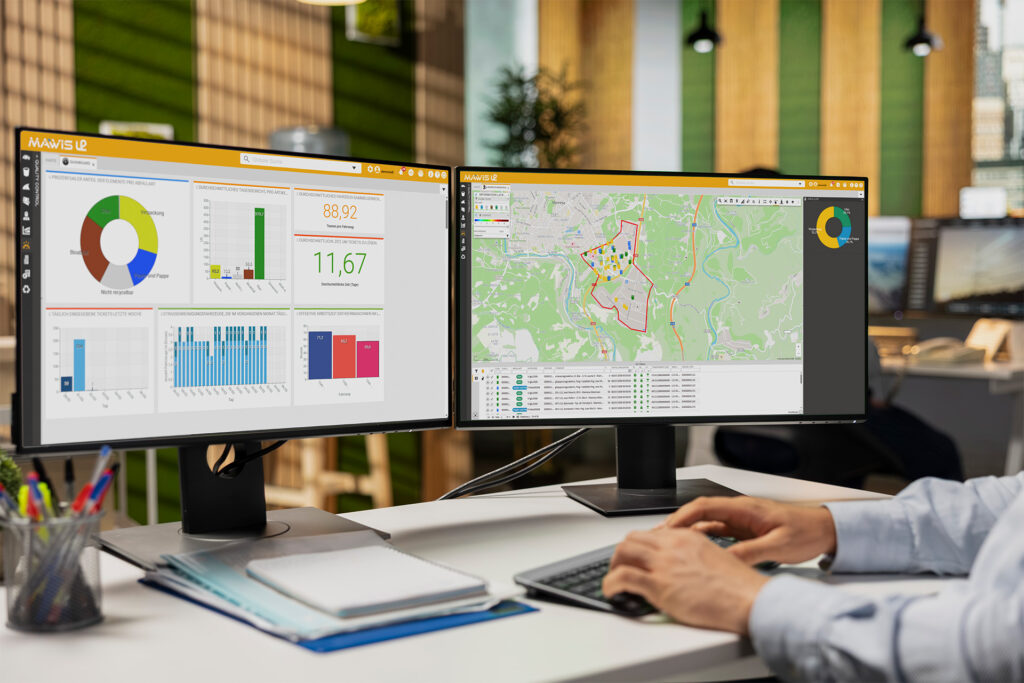
To use this information together, a software solution is needed that consolidates data from the connected systems and links it to the stored bin and customer records. MAWIS.U2, for example, enables emptying records, weight readings and potential irregularities to be managed and analysed centrally. Documented emptying operations, weights and events provide traceable records of services delivered and make it easier to handle complaints or service enquiries. Centralised data storage also reduces the need to search for information across different applications.

How Connected Data Supports Route Planning

Even more value can be gained from the data when the software also supports operational planning. With MAWIS.U2, for example, documented emptying operations also provide a basis for planning future collection rounds. Bin locations and collection areas form the foundation for digital route models. Linking operational data with planning helps match vehicle and staff deployment more closely to actual requirements. The daily routes created are then transferred to the connected onboard computers in the collection vehicles.

Operational information also helps compare planned routes with those actually driven and identify where adjustments are needed. Records of completed rounds therefore provide insights into how future routes can be organised more effectively.

For suitable collection systems, such as publicly accessible containers, fill-level sensors can help align planning with current emptying needs. They measure fill levels and transmit the readings to the software. Combined with the other planning data, this information helps determine which containers should be included in a collection round.

MAWIS: A Platform for Digital Waste Management

As more tasks rely on the data collected, coordination between systems becomes increasingly important. The real added value comes from connecting technologies, rather than from the individual technologies alone. An integrated solution such as MAWIS, whose components are already designed to work together, can simplify integration and reduce the effort required for future expansion.

The platform connects data collection technology with software for documentation, analysis and planning. This includes MAWIS.IDENT for bin identification, MAWIS.WEIGHING for weight measurement, MAWIS.AI VIEW for AI-assisted contamination detection, and MAWIS.SMARTBIN for fill-level measurement and access control. The information comes together in the central MAWIS.U2 software. Mobile applications also enable additional services to be recorded digitally on site.

MOBA therefore provides the essential building blocks along the digital process chain from a single source, including the connections between them. Which components are used depends on the requirements of the waste management company or municipality. Existing systems from other providers can also be integrated via appropriate interfaces.

Digitally Organising Street Cleaning and Winter Maintenance

Many of the underlying tasks are relevant beyond waste management. Other municipal services face the same fundamental question: how can they reliably record which service was delivered, when, where and with which vehicle?

The platform is therefore not limited to waste logistics. Street cleaning and winter maintenance also require operations to be planned and completed services to be documented in a traceable way. MAWIS.U2 supports these tasks as well, allowing different municipal services to be organised within the same platform.

The Full Potential Lies in How Systems Work Together

Whether bin identification, mobile weighing, contamination detection or route planning, each of these technologies can improve individual processes. They only reach their full potential, however, when the information collected is used across systems.

Capture – Document – Optimise describes this approach: data is captured where the work takes place, brought together centrally, and used for service records, planning and operational management. What matters is therefore not just which technology is used, but how well it works together in day-to-day operations.

Precision on the A10: MOBA SUPER-SKI in practical use

Precision on the A10: MOBA SUPER-SKI in practical use

How can consistent elevation control be maintained over long distances during asphalt paving? A recent application of the MOBA SUPER-SKI on the A10 Berlin Ring provides a direct insight into how the system performs under real jobsite conditions.

Automatically Successful

The MOBA Tech Podcast


Feedback directly from the jobsite

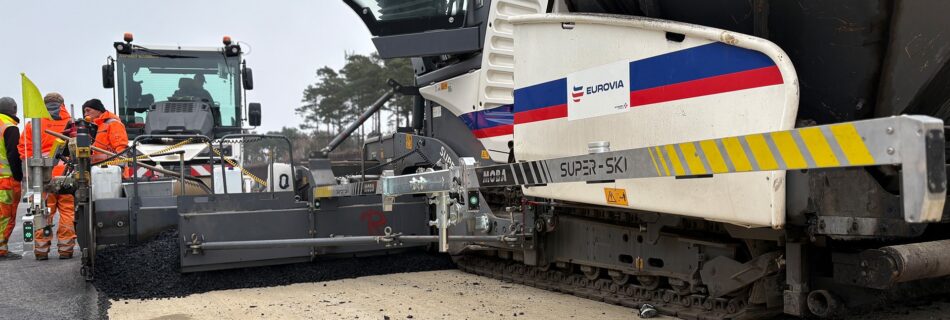
Together with the EUROVIA Berlin team, we had the opportunity to accompany the use of the MOBA SUPER-SKI on a construction project on the A10 Berlin Ring.
Feedback from the site team was consistently positive. What stood out during the practical application was the high level of surface evenness, the straightforward handling when repositioning the sensors, and the reliable, stable control provided by the MOBA-MATIC II during asphalt paving.
The new MOBA transport case for the SUPER-SKI was also well received on site. Site Manager André Wenzel particularly appreciated the easy and back-friendly transport. The case allows the SUPER-SKI sensors to be transported by just one person.

Precise elevation control over longer reference distance

The SUPER-SKI enables precise elevation control over longer reference distances and supports paving crews in reliably meeting demanding quality requirements in road construction.
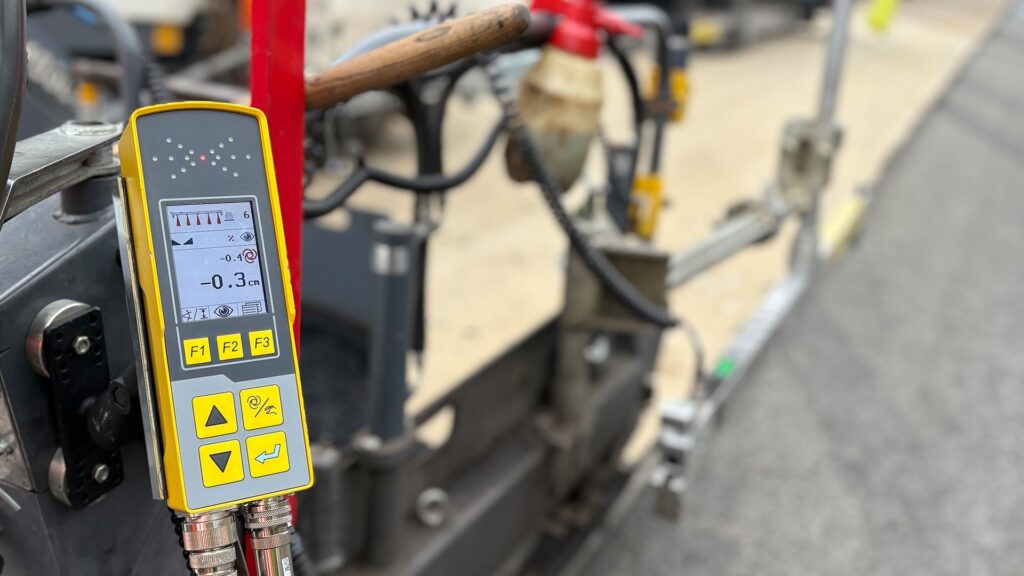
The system measures the road surface at multiple points and creates a consistent reference for automatic levelling. This supports stable elevation control over a larger area. In combination with the MOBA-MATIC II, it provides a reliable control process during asphalt paving.
At the same time, paving crews benefit from efficient workflows and repeatable results.

Surface evenness is more than a measurement result

A well-levelled road is not only a matter of final quality control. Elevation control during paving already has a direct impact on the workflow on site.
Consistent paving quality can help to:

  • reduce rework and additional corrective work,
  • use material more efficiently through consistent layer thicknesses,
  • support productive paving operations,
  • provide the basis for a durable road surface,
  • reduce additional effort and follow-up costs for the client, and
  • support driving comfort and safety for road users.

    Especially on major infrastructure projects, even small deviations can result in additional work and increased use of time, materials and machinery. The more reliably elevation is controlled during paving, the better such corrective work can be avoided.

Practical use on the A10

The application on the Berlin Ring shows how the MOBA SUPER-SKI can support paving crews in achieving consistent elevation control and repeatable results. In everyday jobsite operations, it is not only the quality of the control system that matters, but also straightforward handling and reliable workflows.

We would like to thank the EUROVIA Berlin team for their trust in our technology and for the good cooperation on site.
We look forward to working together on future projects.